
Regulatory Information
Information on manufacturer declarations, environmental and disposal notices, and terms of use.
Model: XSW IEM SR, XSW IEM EK
Warranty
Sennheiser electronic SE & Co. KG gives a warranty of 24 months on these products.
For the current warranty conditions, please visit our website at sennheiser.com or contact your Sennheiser partner.
In the US please contact:
Sennheiser Electronic Corporation
1 Enterprise Drive, Old Lyme, CT 06371
Warranty for Australia and New Zealand only
Sennheiser Australia Pty Ltd provides a warranty of 24 months on these products. For the current warranty conditions, visit Sennheiser website: Australia: sennheiser.com, New Zealand: sennheiser.com
Sennheiser goods come with guarantees that cannot be excluded under Australian and New Zealand Consumer law. You are entitled to a replacement or refund for a major failure and compensation for any other reasonably foreseeable loss or damage. You are also entitled to have the goods repaired or replaced if the goods fail to be of acceptable quality and the failure does not amount to a major failure.
This warranty is in addition to other rights or remedies under law. Nothing in this warranty excludes, limits or modifies any remedy available to be consumer which is granted by law.
To make a claim under this contract, raise a case via Sennheiser website. Australia: sennheiser.com/support, New Zealand: sennheiser.com/support
All expenses of claiming the warranty will be borne by the person making the claim.
Sennheiser international warranty is provided by: Sennheiser Australia Pty Ltd (ABN 68 165 388 312) Level 14, Tower A Zenith Building, 821 Pacific Highway, Chatswood NSW 2067, Australia
Conditions and restrictions for using frequencies
There may be special conditions and restrictions for using frequencies in your country.
Before putting the product into operation, find the information for your country at the following address: sennheiser.com/sifa.
Europe

|
 |
 |
 |

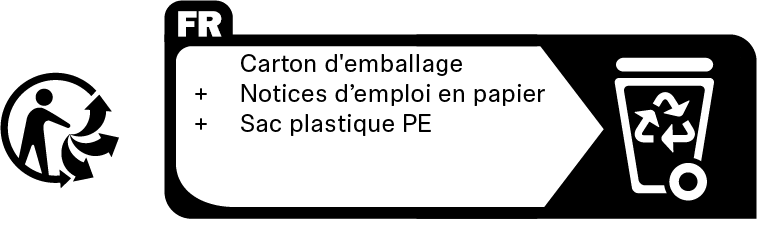
Notes on disposal
The symbol of the crossed-out dumpster on the product, the (rechargeable) battery (if applicable) and/or the packaging indicates that these products must not be disposed of with normal household waste, but must be disposed of separately at the end of their service life. For the packaging, follow the regulations in your country for separating waste. Improper disposal of packaging materials can be harmful to your health and the environment.
The separate collection of waste electrical and electronic equipment, (rechargeable) batteries (if applicable) and packaging is intended to promote reuse and recycling and to prevent negative impacts on public health and the environment, for example due to hazardous substances contained in these products. At the end of their service life, recycle electrical and electronic equipment and (rechargeable) batteries so that their materials can be reused and to prevent environmental pollution.
If (rechargeable) batteries can be removed without destroying them, you are obliged to dispose of them separately (see the product’s operating instructions for information on how to remove the batteries safely). Be especially careful when handling (rechargeable) batteries containing lithium, as these pose special hazards, such as the risk of fire and/or health risks if button cells are swallowed. Reduce battery waste as much as possible by using longer-life batteries or rechargeable batteries.
Further information on the recycling of these products can be obtained from your municipal administration, from the municipal collection points, or from your Sennheiser partner. You may also be able to return electrical or electronic equipment to your distributor, if they are legally required to do so. By disposing of your batteries properly, you are helping to protect public health and the environment.
- RoHS Directive (2011/65/EU)
Hiermit erklärt Sennheiser electronic SE & Co. KG, dass der Funkanlagentyp XSW IEM SR, XSW IEM EK der Richtlinie 2014/53/EU entspricht.
The full text of the EU declaration of conformity is available at the following internet address: sennheiser.com/download.
United Kingdom

WEEE Regulations (2013)
Battery Regulations (2015)
UK Declaration of conformity
- RoHS Regulations (2012)
- Radio Equipment Regulations (2017)
Importer: Sennheiser UK Ltd.
Pacific House, Third Avenue, Globe Park, Marlow
Buckinghamshire SL7 1EY, United Kingdom
USA

FCC ID: DMOXSWIEMSR
Statements regarding FCC and ISED
This device complies with Part 15 of the FCC Rules and with Innovation, Science and Economic Development Canada (ISED) license-exempt RSS standard(s). Operation is subject to the following two conditions: (1) this device may not cause harmful interference, and (2) this device must accept any interference received, including interference that may cause undesired operation.
This equipment has been tested and found to comply with the limits for a Class B digital device, pursuant to part 15 of the FCC Rules. These limits are designed to provide reasonable protection against harmful interference in a residential installation. This equipment generates, uses and can radiate radio frequency energy and, if not installed and used in accordance with the instructions, may cause harmful interference to radio communications. However, there is no guarantee that interference will not occur in a particular installation. If this equipment does cause harmful interference to radio or television reception, which can be determined by turning the equipment off and on, the user is encouraged to try to correct the interference by one or more of the following measures:
- Reorient or relocate the receiving antenna.
- Increase the separation between the equipment and receiver.
- Connect the equipment into an outlet on a circuit different from that to which the receiver is connected.
- Consult the dealer or an experienced radio/ TV technician for help.
This Class B digital device complies with the Canadian ICES-003.
Changes or modifications not expressly approved by Sennheiser electronic Corp. could void the user’s authority to operate the equipment.
Before putting the device into operation, please observe the respective country-specific regulations!
Radiofrequency radiation exposure Information
This equipment complies with FCC and ISED radiation exposure limits set forth for an uncontrolled environment. The XSW IEM SR equipment should be installed and operated with minimum distance of 20 cm between the radiator and your body.
RSS-Gen Issue 5 - 6.8 Transmit antenna
This radio transmitter [IC: 2099A-XSWIEMSR] has been approved by Innovation, Science and Economic Development Canada to operate with the antenna types listed below, with the maximum permissible gain indicated. Antenna types not included in this list that have a gain greater than the maximum gain indicated for any type listed are strictly prohibited for use with this device.
Omni Antenna: -1.5dBi, 50Ω
RSS-210 Issue 10 Annex G.6
This device operates on a no-interference, no-protection basis. Should the user seek to obtain protection from other radio services operating in the same TV bands, a radio licence is required. For further details, consult Innovation, Science and Economic Development Canada’s Client Procedures Circular CPC-2-1-28, Voluntary Licensing of Licence-Exempt Wireless Microphones in the TV Bands.
Contact information: Sennheiser Electronic Corporation, 1 Enterprise Drive, Old Lyme, CT 06371; sennheiser.com
Canada
Statements regarding FCC and ISED
This device complies with Part 15 of the FCC Rules and with Innovation, Science and Economic Development Canada (ISED) license-exempt RSS standard(s). Operation is subject to the following two conditions: (1) this device may not cause harmful interference, and (2) this device must accept any interference received, including interference that may cause undesired operation.
This equipment has been tested and found to comply with the limits for a Class B digital device, pursuant to part 15 of the FCC Rules. These limits are designed to provide reasonable protection against harmful interference in a residential installation. This equipment generates, uses and can radiate radio frequency energy and, if not installed and used in accordance with the instructions, may cause harmful interference to radio communications. However, there is no guarantee that interference will not occur in a particular installation. If this equipment does cause harmful interference to radio or television reception, which can be determined by turning the equipment off and on, the user is encouraged to try to correct the interference by one or more of the following measures:
- Reorient or relocate the receiving antenna.
- Increase the separation between the equipment and receiver.
- Connect the equipment into an outlet on a circuit different from that to which the receiver is connected.
- Consult the dealer or an experienced radio/ TV technician for help.
This Class B digital device complies with the Canadian ICES-003.
Changes or modifications not expressly approved by Sennheiser electronic Corp. could void the user’s authority to operate the equipment.
Before putting the device into operation, please observe the respective country-specific regulations!
Radiofrequency radiation exposure Information
This equipment complies with FCC and ISED radiation exposure limits set forth for an uncontrolled environment. The XSW IEM SR equipment should be installed and operated with minimum distance of 20 cm between the radiator and your body.
RSS-Gen Issue 5 - 6.8 Transmit antenna
This radio transmitter [IC: 2099A-XSWIEMSR] has been approved by Innovation, Science and Economic Development Canada to operate with the antenna types listed below, with the maximum permissible gain indicated. Antenna types not included in this list that have a gain greater than the maximum gain indicated for any type listed are strictly prohibited for use with this device.
Omni Antenna: -1.5dBi, 50Ω
RSS-210 Issue 10 Annex G.6
This device operates on a no-interference, no-protection basis. Should the user seek to obtain protection from other radio services operating in the same TV bands, a radio licence is required. For further details, consult Innovation, Science and Economic Development Canada’s Client Procedures Circular CPC-2-1-28, Voluntary Licensing of Licence-Exempt Wireless Microphones in the TV Bands.
- IC: 2099A-XSWIEMSR
CAN ICES-003(B)/NMB-003(B)
- IC: 2099A-XSWIEMSRB
CAN ICES-003(B)/NMB-003(B)
Brazil

XSW IEM SR 02290-22-07356
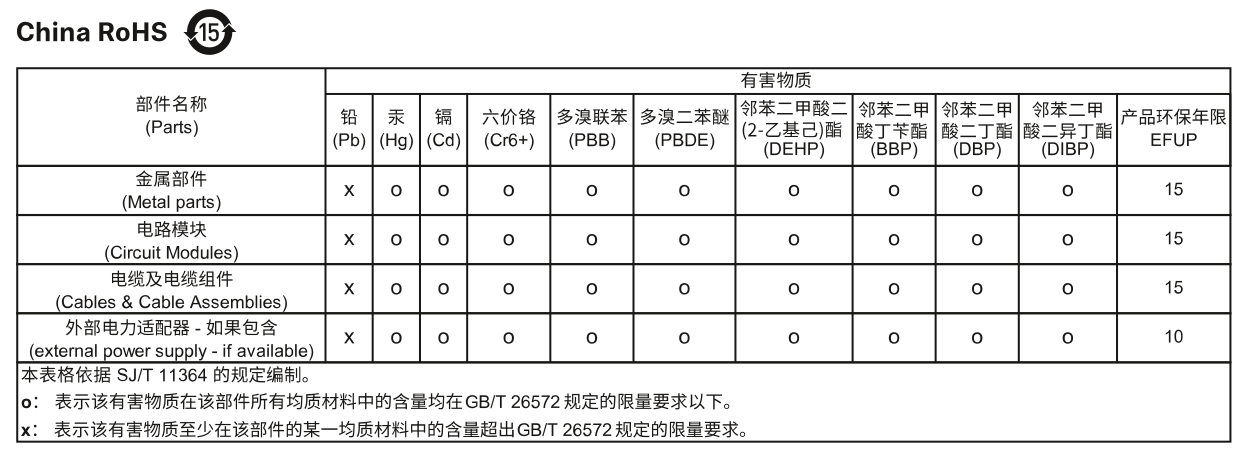
China
Vietnam
A Range (476 - 500 MHz), B Range (572 - 596 MHz), C Range (662 - 686 MHz)
Kể từ ngày 1 tháng 12 năm 2012, các sản phẩm được sản xuất bởi Sennheiser tuân thủ Thông tư 30/2011/TT-BCT quy định về giới hạn cho phép đối với một số chất độc hại trong các sản phẩm điện và điện tử.
Mexico
A Range (476 - 500 MHz), B Range (572 - 596 MHz)

South Korea

기기의 명칭: Stereo Receiver
모델명: XSW IEM EK
인증번호: R-R-SE9-XSWIEMEK-A
기기의 명칭: Stereo Transmitter
방송제작 및 공연 지원용 무선설비의 기기
모델명: XSW IEM SR
인증번호: R-C-SE9-XSWIEMSR-A
K Range (925.2 - 937.3 MHz)
기기의 명칭: Stereo Receiver
모델명: XSW IEM EK
인증번호: R-R-SE9-XSWIEMEK
기기의 명칭: Stereo Transmitter
방송제작 및 공연 지원용 무선설비의 기기
모델명: XSW IEM SR
인증번호: R-C-SE9-XSWIEMSR
Indonesia
B Range (572 - 596 MHz), C Range (662 - 686 MHz)
Australia / New Zealand

Additional national certification
Further information about approvals and certification for other countries can be found at the following address: sennheiser.com/download.