Operation
Positioning the microphone: Drums / Percussions
Attention: When closing the hi-hat, a strong air current is created on the edge. If the microphone is positioned too close to the edge, interfering noise due to the air current can occur.
-
It is vital to observe the following notes:
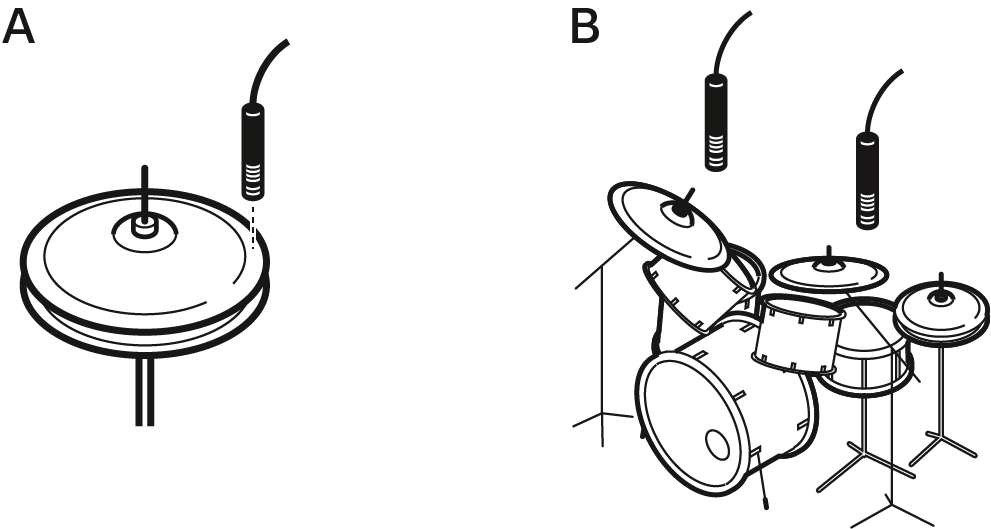
- Position A: Position the microphone a few centimetres above the outer edge of the hi-hat aiming down. If necessary, remove unwanted low-frequency signal portions by high pass filtering.
- Position B: Good starting position for live miking applications. If the overhead microphones are only used for picking up the cymbals, unwanted signal portions can be attenuated by high pass filtering.
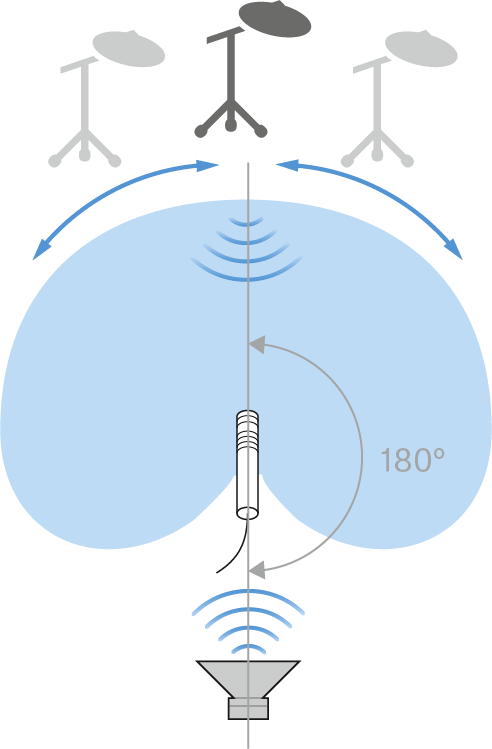
In order to prevent interference due to crosstalk between adjacent sound sources, try to position the microphone so that the interfering sound source is located in the angle area of the highest cancellation of the microphone (approx. 180°, see Polar pattern).
Positioning the monitor loudspeakers
-
To prevent feedback and crosstalk, postion your monitor loudspeakers in the angle area of the highest cancellation of the microphone
(approx. 180°, see Polar pattern).
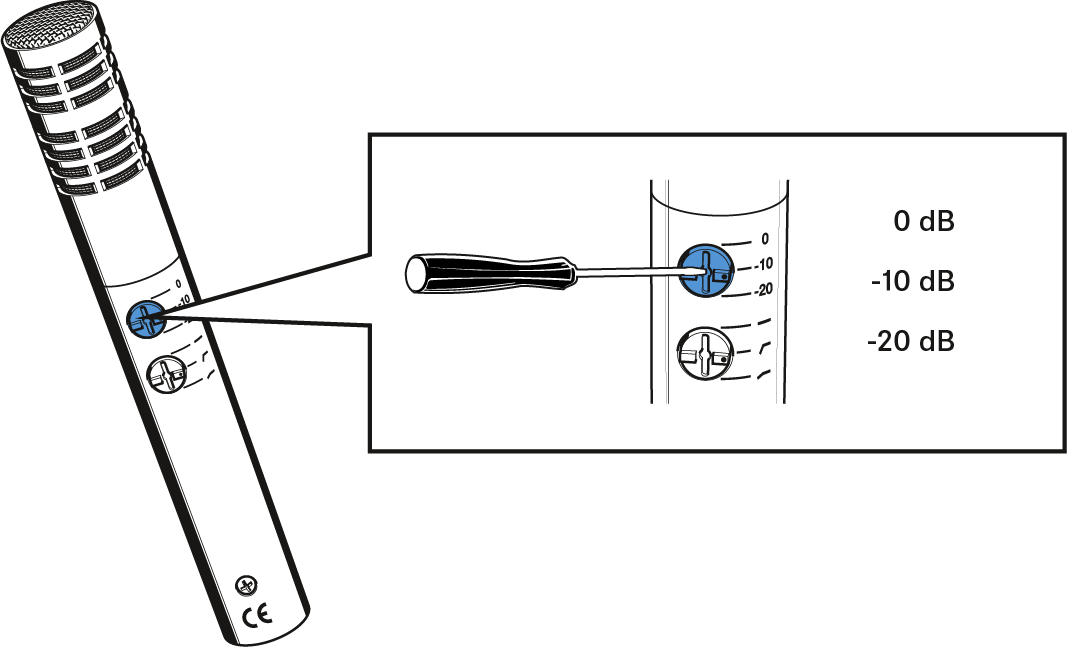
Adjusting the sensitivity
-
The microphone sensitvity can remain unchanged (0) or be reduced by 10 dB or 20 dB.
The latter is recommended when there is a risk that the microphone or subsequent microphone input is overmodulated, e.g. due to high sound pressure levels from drums, brass instruments, etc.We recommend that you mute the corresponding microphone channel on the mixing console before connecting and disconnecting the microphone cable, switching on and off the phantom powering or setting the switches.
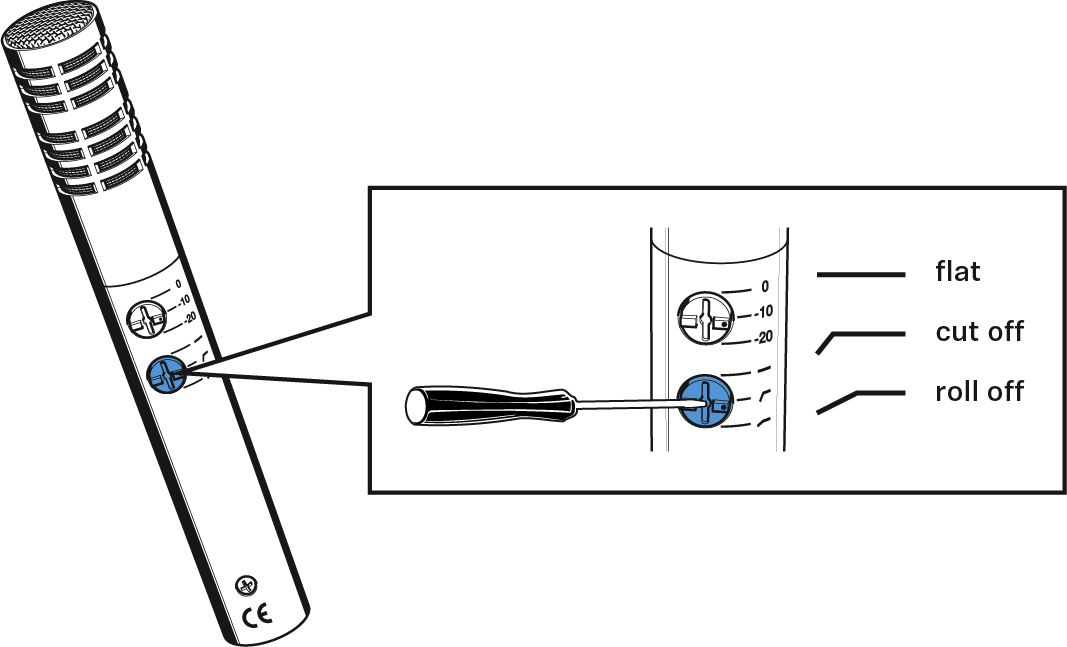
Adjusting the bass filtern
The e 914 has been designed for an extended low-frequency bass response. With certain live or close instrument miking applications, an over-emphasis of the low frequencies can occur.
-
This can be compensated for by the 6 dB/octave roll-off filter. The cut-off filter reduces low-frequency wind noise by 18 dB/octave.