
Operation
Positioning the microphone an a guitar amp
-
It is vital to observe the following notes:
- Position A: Microphone directed towards the dome of the loudspeaker.
- Resulting sound: many trebles; aggressive sound
- Position B: Microphone directed towards the middle between dome and edge of the loudspeaker. If necessary, turn the microphone by approx. 30° towards the edge.
- Resulting sound: less trebles, more lower mids, smoother sound; balanced, natural sound
- Position C: Microphone directed towards the edge of the loudspeaker.
- Resulting sound: less trebles, more lower mids, smoother sound
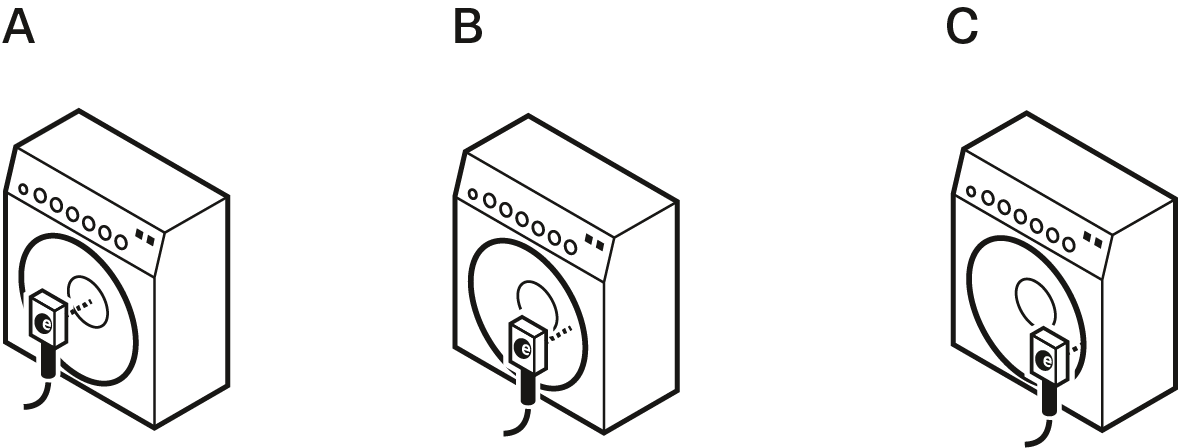
- Position A: Microphone directed towards the dome of the loudspeaker.
Positioning the microphone on a drum
-
It is vital to observe the following notes:
- Position D: Position the microphone on the drum so that it is 3 to 5 cm above the batter head.
Direct the microphone towards the center of the batter head. The fundamental tone to overtones ratio can
be adjusted via the angle. The most balanced results are obtained at an angle of 30–60°.
- Resulting sound D: more fundamental tone, little overtones
- Resulting sound E: less fundamental tone, many overtones
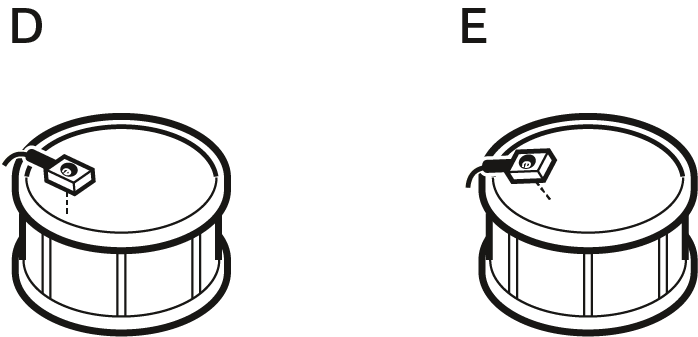
- Position D: Position the microphone on the drum so that it is 3 to 5 cm above the batter head.
Direct the microphone towards the center of the batter head. The fundamental tone to overtones ratio can
be adjusted via the angle. The most balanced results are obtained at an angle of 30–60°.
Positioning the monitor loudspeakers
-
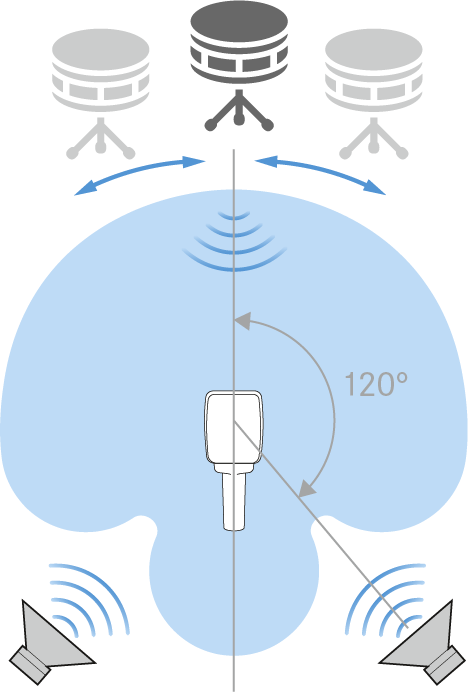
To prevent feedback and crosstalk, postion your monitor loudspeakers in the
angle area of the highest cancellation of the microphone (approx. 120°).
Adapting the sound characteristics
The e 906 features a switchable presence filter which allows to adapt the microphone to the different sound requirements and styles (see Frequency response).
The mid frequency of the presence filter is 4.2 kHz.
-
Use a pointed tool such as a small screwdriver to move the 3-position slide switch to the desired position.
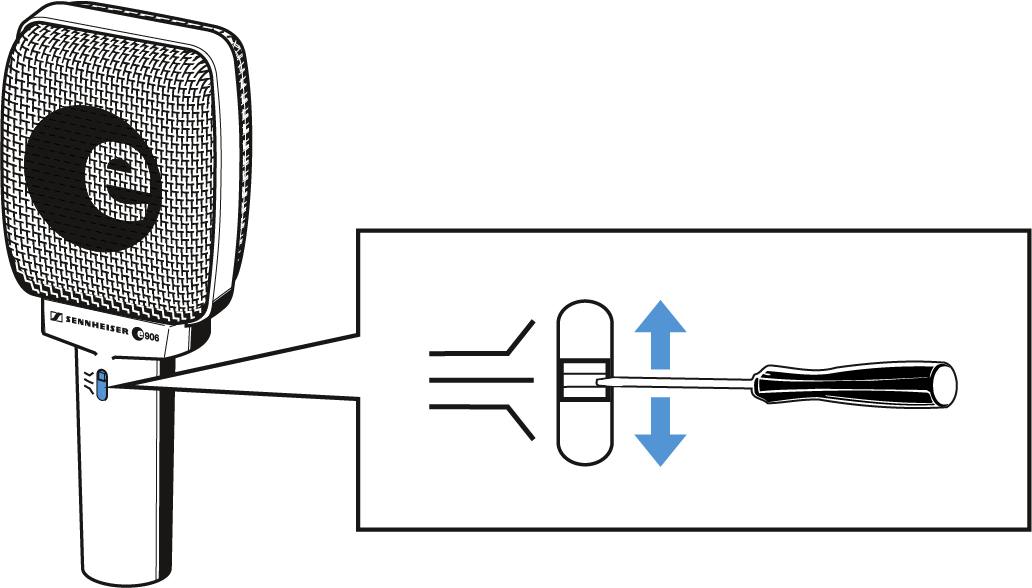

- Setting: boosted presence range
- Suitability: e.g. for aggressive metal rhythm guitars

- Setting: normal presence range
- Suitability: e.g. for classic rock

- Setting: attenuated presence range
- Suitability: e.g. for warm and smooth jazz and blues sounds