L 6000
Model: L 6000 | LM 6060 | LM 6061 | LM 6062 | LM 6070
Europe

|
 |
 |
 |

- RoHS Directive (2011/65/EU)
- EMC Directive (2014/30/EU)
- Low Voltage Directive (2014/35/EU)
The full text of the EU declaration of conformity is available at the following internet address: sennheiser.com/download.
United Kingdom

|
|
|
|
- RoHS Regulations (2012)
- EMC Regulations (2016)
- Electrical Equipment (Safety) Regulations (2016)
Importer: Sennheiser UK Ltd.
Pacific House, Third Avenue, Globe Park, Marlow
Buckinghamshire SL7 1EY, United Kingdom
USA

Statements regarding FCC and ISED
This device complies with part 15 of the FCC rules and RSS-210 of Innovation, Science and Economic Development Canada (ISED). Operation is subject to the following two conditions: (1) this device may not cause harmful interference, and (2) this device must accept any interference received, including interference that may cause undesired operation.
This equipment has been tested and found to comply with the limits for a Class B digital device, pursuant to part 15 of the FCC Rules. These limits are designed to provide reasonable protection against harmful interference in a residential installation. This equipment generates, uses and can radiate radio frequency energy and, if not installed and used in accordance with the instructions, may cause harmful interference to radio communications. However, there is no guarantee that interference will not occur in a particular installation. If this equipment does cause harmful interference to radio or television reception, which can be determined by turning the equipment off and on, the user is encouraged to try to correct the interference by one or more of the following measures:
- Reorient or relocate the receiving antenna.
- Increase the separation between the equipment and receiver.
- Connect the equipment into an outlet on a circuit different from that to which the receiver is connected.
- Consult the dealer or an experienced radio/ TV technician for help.
Changes or modifications not expressly approved by Sennheiser electronic Corp. could void the user’s authority to operate the equipment.
Contact information: Sennheiser Electronic Corporation, 1 Enterprise Drive, Old Lyme, CT 06371; sennheiser.com
CAN ICES-003 (B)/NMB-003(B):
This Class B digital device complies with the Canadian ICES-003.
RSS-210 Issue 10 Annex G.6
This device operates on a no-interference, no-protection basis. Should the user seek to obtain protection from other radio services operating in the same TV bands, a radio licence is required. For further details, consult Innovation, Science and Economic Development Canada’s Client Procedures Circular CPC-2-1-28, Voluntary Licensing of Licence-Exempt Wireless Microphones in the TV Bands.
Canada
Statements regarding FCC and ISED
This device complies with part 15 of the FCC rules and RSS-210 of Innovation, Science and Economic Development Canada (ISED). Operation is subject to the following two conditions: (1) this device may not cause harmful interference, and (2) this device must accept any interference received, including interference that may cause undesired operation.
This equipment has been tested and found to comply with the limits for a Class B digital device, pursuant to part 15 of the FCC Rules. These limits are designed to provide reasonable protection against harmful interference in a residential installation. This equipment generates, uses and can radiate radio frequency energy and, if not installed and used in accordance with the instructions, may cause harmful interference to radio communications. However, there is no guarantee that interference will not occur in a particular installation. If this equipment does cause harmful interference to radio or television reception, which can be determined by turning the equipment off and on, the user is encouraged to try to correct the interference by one or more of the following measures:
- Reorient or relocate the receiving antenna.
- Increase the separation between the equipment and receiver.
- Connect the equipment into an outlet on a circuit different from that to which the receiver is connected.
- Consult the dealer or an experienced radio/ TV technician for help.
Changes or modifications not expressly approved by Sennheiser electronic Corp. could void the user’s authority to operate the equipment.
Contact information: Sennheiser Electronic Corporation, 1 Enterprise Drive, Old Lyme, CT 06371; sennheiser.com
CAN ICES-003 (B)/NMB-003(B):
This Class B digital device complies with the Canadian ICES-003.
RSS-210 Issue 10 Annex G.6
This device operates on a no-interference, no-protection basis. Should the user seek to obtain protection from other radio services operating in the same TV bands, a radio licence is required. For further details, consult Innovation, Science and Economic Development Canada’s Client Procedures Circular CPC-2-1-28, Voluntary Licensing of Licence-Exempt Wireless Microphones in the TV Bands.
Australia / New Zealand

Japan
日本の電波法に準拠
本機器は、日本の電波法に準拠しています。
本機器を改変しないでください(守らない場合、付与された指定番号が無効になります)。
Japanese Radio Law Compliance
This device is granted pursuant to the Japanese Radio Law (電波法).
This device should not be modified (otherwise the granted designation number will become invalid).
LDモード
LDモードを使用することはできません。
South Korea

R-REM-SE9-L6000
Vietnam
Kể từ ngày 1 tháng 12 năm 2012, các sản phẩm được sản xuất bởi Sennheiser tuân thủ Thông tư 30/2011/TT-BCT quy định về giới hạn cho phép đối với một số chất độc hại trong các sản phẩm điện và điện tử.
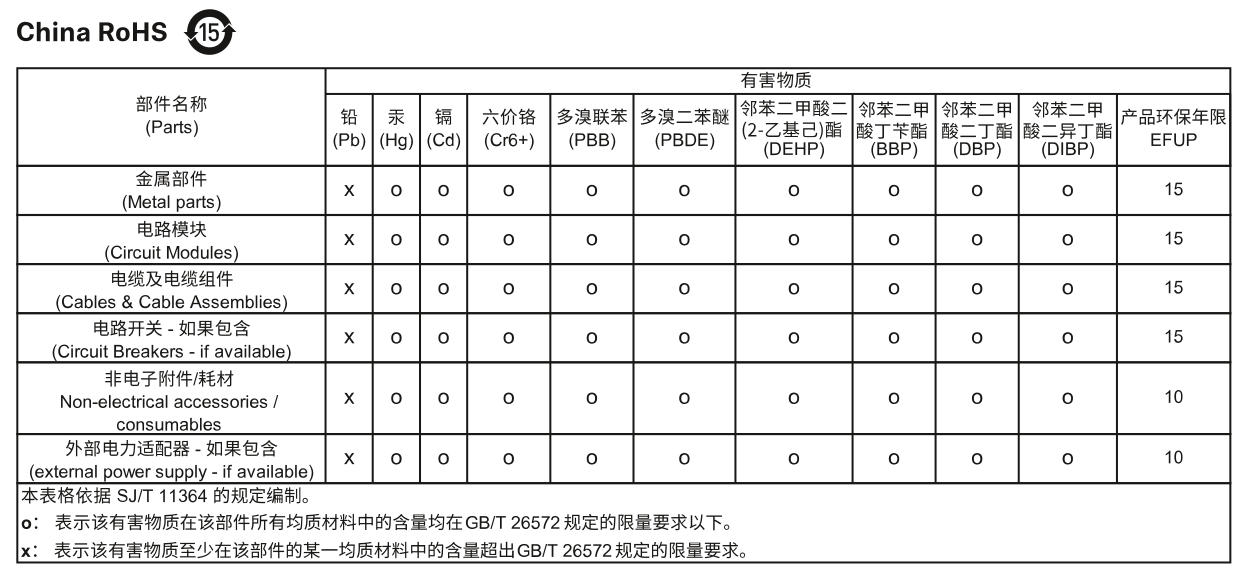
China
使用微功率短距离无线电发射设备应当符合国家无线电管理有关规定
(一)符合“微功率短距离无线电发射设备目录和技术要求”的具体条款和使用场景,
采用的天线类型和性能,控制、调整及开关等使用方法:
具体条款
无线传声器
用于教育、文化部门的视听训练,电影院、音乐厅、会议室等公共
场所及残疾
人士的听觉辅助使用。在旅游区作为小型广播设备应用。
若使用频率与当地声音、电视广播电台频率相同时,不得在当地
使用;若对
当地声音、电视广播接收产生干扰时,应立即停止使用,待消除干
扰或调整
到无干扰频率后方可重新使用。
1.使用频率及发射功率:
(1) 使用频率:87-108MHz
发射功率限值:
45nW(e.r.p),手机附带无线传声器;
3mW(e.r.p),其他设备。
(2) 使用频率:75.4-76MHz, 84-87MHz, 189.9-223MHz
发射功率限值:10mW(e.r.p)
(3) 使用频率:470-510MHz, 630-698MHz
发射功率限值:50mW(e.r.p)
2.占用带宽:不大于200kHz
3.频率容限:100×10-6
使用场景:音乐舞台、演讲台、剧院、会议
天线的类型:单极天线
性能/控制:无线电范围100米
调整及开关产品的使用方法:通过接收器的用户界面
(二)不得擅自改变使用场景或使用条件、扩大发射频率范围、加大发射功率(包括额外加装射频功率放大器),不得擅自更改发射天线;
(三)不得对其他合法的无线电台(站)产生有害干扰,也不得提出免受有害干扰保护;
(四)应当承受辐射射频能量的工业、科学及医疗(ISM)应用设备的干扰或其他合法的无线电台(站)干扰;
(五)如对其他合法的无线电台(站)产生有害干扰时,应立即停止使用,并采取措施消除干扰后方可继续使用;
(六)在航空器内和依据法律法规、国家有关规定、标准划设的射电天文台、气象雷达
站、卫星地球站(含测控、测距、接收、导航站)等军民用无线电台(站)、机场等的
电磁环境保护区域内使用微功率设备,应当遵守电磁环境保护及相关行业主管部门的规定;
(七)禁止在以机场跑道中心点为圆心、半径5000 米的区域内使用各类模型遥控器;
(八)微功率设备使用时温度和电压的环境条件
-10°C-+ 55°C的工作溫度,3个1.5V AA电池,并随附机架式接收器的电源。